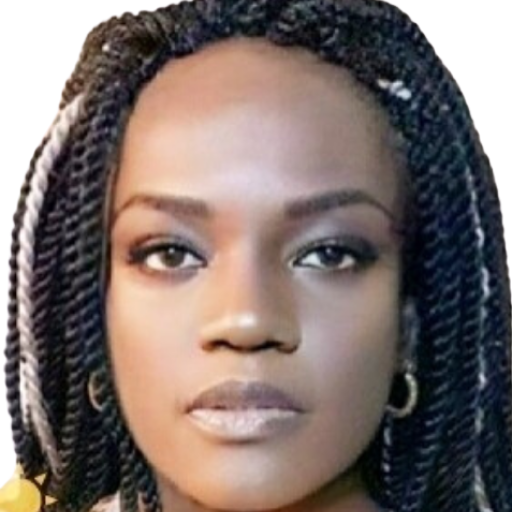

In a time when very few women — and especially African women — were able to access or be recognised in medicine, Susan Ofori-Atta broke multiple barriers: gender, colonial-era constraints, and societal expectations. She was the bridge between colonial medical structures and services to her own community. Her legacy is not just in her focus on illness, but also in structural issues like inheritance rights, women’s rights, and children’s nutrition, which affect health outcomes.
We talk of her because she didn’t just become a doctor; she used that role to push for wider change. Her story shows that heroes are not just the fighters on the front lines — they are the healers, the builders, the ones who change the rules.
Early Life & Background
- Susan Ofori-Atta was born in 1917 in Kyebi (then part of the Gold Coast, present-day Ghana) to a prominent royal family: her father was Nana Sir Ofori Atta I, Okyenhene of the Akyem Abuakwa Traditional Area.
- She received her primary schooling at St. Mary’s Convent in Elmina around 1921, then enrolled at the newly opened Achimota School in 1929. She later served as the Girls’ School Prefect in her senior year.
- After secondary education, she trained in midwifery at the Korle-Bu Midwifery Training School, graduating in 1935. She then went on for further training in Scotland.
Education & Medical Training
- Susan was sponsored (in part by funds set aside by her father) to attend the University of Edinburgh Medical School, where she obtained an MBChB (or equivalent) in 1947.
- She became qualified as a physician, specialising in paediatrics and maternal health. She held credentials such as those of a Diplomat of the Royal College of Obstetricians & Gynaecologists (1949) and the Royal College of Paediatrics & Child Health (1958).
Career Highlights & Contributions
- She was the first Ghanaian woman doctor (in the Gold Coast) and one of the earliest West African women physicians.
- Susan worked at the Princess Marie Louise Hospital for Women (also known as a paediatric/children’s hospital in Accra). She was affectionately called “mmofra doctor” (children’s doctor) due to her work with children.
- At the University of Ghana Medical School, she was a founding member of the Paediatrics Department — helping structure medical training for children’s health in Ghana.
- She ran a private practice (the Accra Clinic) focusing on women’s and children’s health, further extending access to care beyond the public hospital system.
Advocacy & Legacy
- Susan Ofori-Atta was more than a doctor; she was an advocate for women’s and children’s rights, including inheritance rights. She opposed “the Akan system of inheritance” that was discriminatory towards the female gender. This led to legislation granting spouses and children the right of succession in the event of a death intestate.
- Her research on childhood malnutrition (especially on “kwashiorkor”) earned her an honorary Doctor of Science from the University of Ghana.
- In recognition of her philanthropic work (including free medical services), Pope John Paulo II awarded the Royal Cross. This was during his 1980 visit to Ghana.
Personal & Family
- She married E. V. C. de Graft-Johnson, a barrister-at-law in Accra.
- Susan belonged to a family deeply involved in Ghana’s socio-political landscape. One of her brothers was William Ofori‑Atta (one of “The Big Six” in Ghana’s independence movement). Her other brother, Kofi Asante Ofori-Atta, held a government office.
Death & Remembrance
- Susan Ofori-Atta died of natural causes in July 1985 in the United Kingdom.
- Her alma mater, Achimota School, named a girls’ house after her in her honour.